 Film-Court – Your Ultimate Source for Short Films & Reviews
 Film-Court – Your Ultimate Source for Short Films & Reviews
Kuldeep Yadav's enthusiasm during net sessions had noticeably waned as the tour progressed. Before the third Test at Lord's, he was a regular, bowling with full intensity against Indian batsmen.
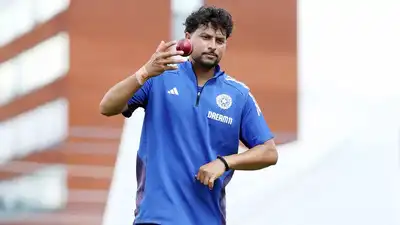
Kuldeep Yadav's sidelined status raises questions.
However, in Manchester, Kuldeep appeared more relaxed. His absence from India's playing XI became a prominent topic. As India struggled at Old Trafford, the decision to leave him out sparked debate.
"Kuldeep is world class and he's bowling really well at the moment. We're trying our best to find ways for him to get in. But, unfortunately (we haven’t been able to), with just the balance with the batting," Morkel stated.
Sources indicate that Kuldeep's selection was discussed before the fourth Test. Some within the management considered including him in the XI, but a more conservative approach ultimately prevailed, as concerns about Kuldeep's batting weighed against him.
Despite Kuldeep being considered a weaker batsman than Shardul Thakur, captain Gill's apparent reluctance to utilize Thakur's bowling suggests a lack of confidence in the latter's abilities as a bowler.
The batting collapses in Leeds early in the series had a significant impact on the team management, leading to a greater emphasis on extending innings and maintaining competitiveness through prolonged batting.
“There’s always the option of going in with quicks and picking your six best batters. We do have all those discussions. But, the guys who have played in the last two Test matches have done a good job in terms of spin bowling,” Morkel said, revealing that the decision to introduce Washington Sundar late into England's first innings was Gill's.
The selection of Anshul Kamboj has also been a subject of discussion. It appears that the entire team management wasn't in complete agreement on this decision. Before the Test, captain Shubman Gill suggested that the choice was between Kamboj and Prasidh Krishna.
Furthermore, the possibility of selecting Kuldeep over Kamboj was reportedly considered.
Kamboj's lack of pace in the first innings has become a central point of discussion. The decision to play him just two days after his arrival, especially following his recovery from a shin injury, was a risky one. It would be unfair to make a definitive judgment on Kamboj based solely on his performance in the first innings.
Morkel explained that the intention was for Kamboj to handle a significant portion of the workload, allowing Jasprit Bumrah to be used in shorter, more impactful spells.
However, the actual outcome saw Kamboj bowling only 18 overs, while Bumrah bowled 33 overs.
“Anshul arrived here and bowled well in the nets. We were looking at the volume of overs. He can nip it around at off-stump. Unfortunately, there’s no place to hide in international cricket,” Morkel concluded.
Newer articles
Older articles

 R. Ashwin Eyes ILT20 Opportunity, Set to Enter Auction After Retirement
 'Still a long way to go' - Taskin encouraged by steps towards rediscovering rhythm
 Litton Das Reveals Colombo Pitch Preference: Mahedi Hasan Over Miraz Key to Victory
 Ankit Sharma Secures NoC from Puducherry, Eyes Kerala Move
 Decoding Urine Color: What Your Stream Reveals About Your Health
 Tamim to contest BCB polls, keeps president bid open
 Pujara Reveals Nerves Before Ringing Lord's Bell; India Aims for Test Control
 India vs England: Lord's Test Preview - History, Stats, and Key Battles
 Deepak Chahar and Wife Join Cricket Stars at Wimbledon After Kohli's Appearance
 Reddy Aims for Bowling Consistency After Lord's Test Breakthrough